

Life Insurance: One of the Most Important Gifts You Can Leave Your Family

Most people insure their cars, homes, phones, and even their vacations. Yet many overlook the one asset that makes all of those things possible: their ability to earn an income.

Life insurance is not just a financial product—it’s a promise. A promise that the people you love will have financial protection when they need it most.

While no one likes to think about worst-case scenarios, planning for the unexpected is one of the most responsible financial decisions you can make.

What Is Life Insurance?

Life insurance is a financial agreement that provides a benefit to your chosen beneficiaries if you pass away while the policy is active.

This benefit can help your family maintain financial stability and continue pursuing their goals during a difficult time.

Depending on the policy, life insurance can help cover:

  • Mortgage payments
  • Rent and living expenses
  • Children’s education
  • Outstanding debts
  • Funeral expenses
  • Future financial goals
  • Income replacement

The purpose is simple: protect the people who depend on you.

Why Life Insurance Matters

Many families rely on one or two primary income earners. If that income suddenly disappears, the financial impact can be significant.

Without proper protection, loved ones may face difficult choices, including:

  • Selling assets
  • Taking on debt
  • Delaying education plans
  • Reducing their standard of living
  • Using retirement savings prematurely

Life insurance helps create a financial cushion during an already emotional time.

Life Insurance Is About Love, Not Death

One of the biggest misconceptions about life insurance is that it’s about preparing for death.

In reality, it’s about protecting life.

It’s about ensuring your spouse can continue paying the bills.

It’s about making sure your children can pursue their dreams.

It’s about providing stability when your family needs it most.

At its core, life insurance is one of the purest expressions of financial responsibility and love.

The Earlier You Start, the Better

Many people assume life insurance is something they can purchase later in life.

However, waiting often means:

  • Higher premiums
  • More health restrictions
  • Fewer coverage options
  • Increased financial risk

Generally, younger and healthier individuals can secure more favorable coverage and rates.

Starting early allows you to lock in protection before unexpected health conditions arise.

Common Reasons People Need Life Insurance

Parents

Parents often purchase life insurance to ensure their children’s future remains secure regardless of what happens.

Homeowners

A policy can help protect family members from the burden of mortgage payments.

Business Owners

Life insurance can help protect business continuity and support succession planning.

Single Professionals

Even individuals without dependents may want coverage to manage debts, protect parents, or leave a legacy.

Future Retirees

Some life insurance solutions can complement broader financial and retirement strategies.

How Much Coverage Do You Need?

The right amount of coverage depends on your unique situation.

Factors to consider include:

  • Current income
  • Outstanding debts
  • Mortgage balance
  • Number of dependents
  • Future education expenses
  • Retirement goals
  • Existing savings and investments

A professional financial review can help determine the appropriate level of protection for your family.

The Cost of Waiting

The biggest mistake people make with life insurance is not choosing the wrong policy.

It’s waiting too long to get one.

Many families discover the importance of life insurance only after a crisis occurs.

Financial planning works best when protection is established before it becomes necessary.

Final Thoughts

Life insurance is not a purchase you make for yourself.

It’s a gift you leave for the people you care about most.

While we cannot predict the future, we can prepare for it. Having a life insurance strategy in place helps provide confidence, security, and peace of mind knowing your loved ones will have support no matter what life brings.

The question is not whether life insurance is important.

The question is whether the people you love would be financially protected if something happened to you tomorrow.

Leave a Reply

Your email address will not be published. Required fields are marked *

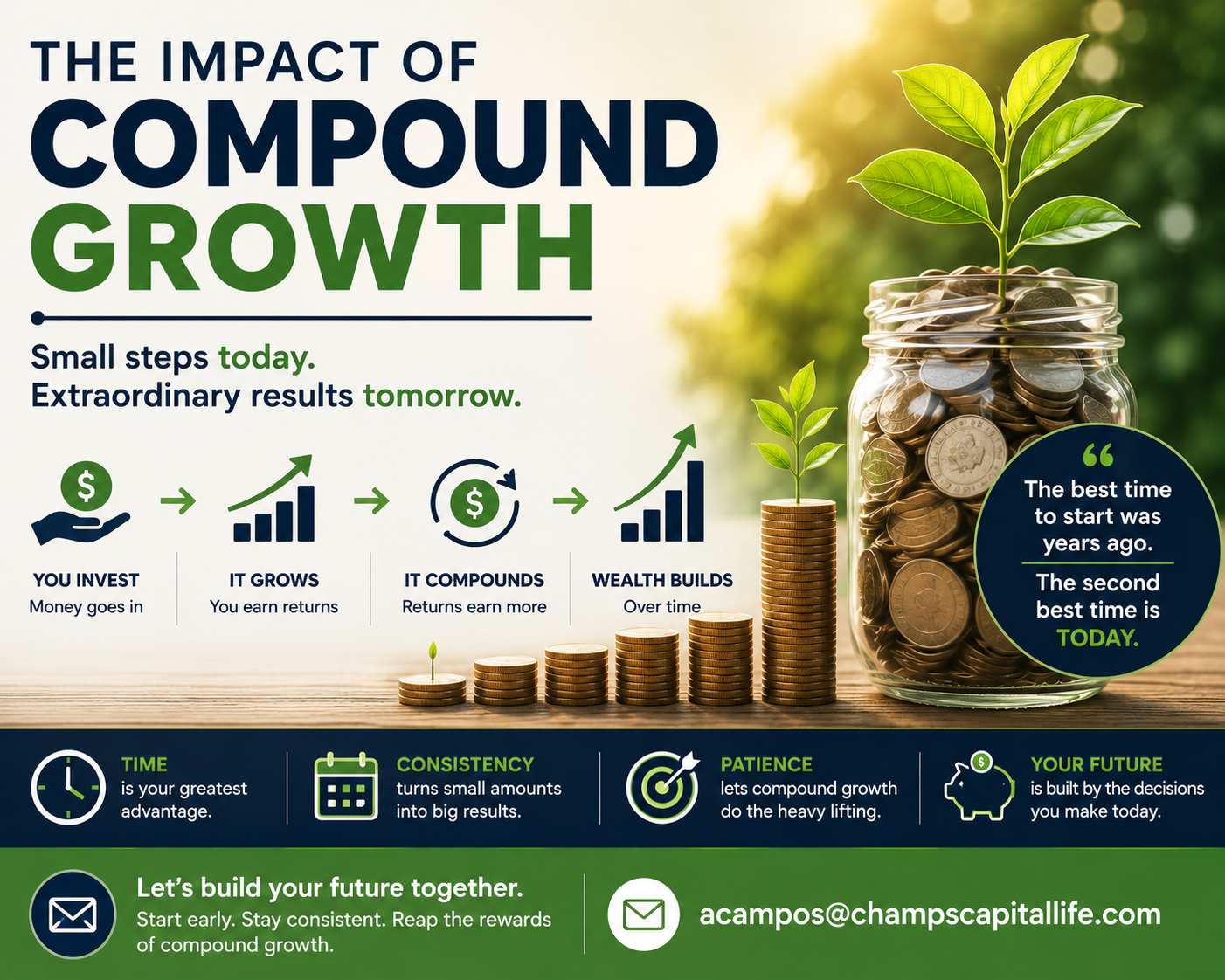
The Impact of Compound Growth: Why Time Is Your Greatest Financial Asset

When it comes to building wealth, many people believe they need a high income, advanced investment strategies, or perfect timing in the market. While these factors can help, the most powerful wealth-building tool available to everyone is much simpler: compound growth.

Often referred to as the “eighth wonder of the world,” compound growth has the ability to transform small, consistent contributions into significant wealth over time. Understanding how it works can completely change the way you approach saving and investing.

What Is Compound Growth?

Compound growth occurs when your money earns returns, and those returns begin earning returns of their own.

In simple terms, you’re not just earning growth on your original investment—you are also earning growth on the growth that has already accumulated.

This creates a snowball effect that accelerates over time.

For example:

  • Year 1: You invest $10,000 and earn 5%.
  • End of Year 1: Your balance becomes $10,500.
  • Year 2: You earn 5% on $10,500, not just the original $10,000.
  • End of Year 2: Your balance becomes $11,025.

As years pass, the effect becomes increasingly powerful.

Why Time Matters More Than Amount

One of the biggest misconceptions about wealth building is that you need large sums of money to get started.

In reality, time is often more important than the amount invested.

Consider two individuals:

Investor A

  • Starts investing at age 25
  • Contributes $200 per month
  • Continues for 40 years

Investor B

  • Starts investing at age 40
  • Contributes $400 per month
  • Continues for 25 years

Despite contributing twice as much each month, Investor B may still end up with less money because Investor A gave compound growth more time to work.

The lesson is simple: starting early can be more valuable than investing larger amounts later.

The Snowball Effect

Compound growth follows a pattern that surprises many people.

During the early years, growth may appear slow and insignificant. Some investors become discouraged because they don’t see dramatic results immediately.

However, as time passes, the growth curve begins to accelerate.

The first $10,000 may take years to accumulate.

The next $10,000 may happen much faster.

Eventually, your earnings can become larger than your contributions.

This is the point where compound growth truly begins working in your favor.

The Cost of Waiting

Many people postpone saving because they feel they don’t have enough money today.

Unfortunately, waiting can be expensive.

A person who delays investing for ten years loses more than just ten years of contributions—they lose ten years of compound growth.

Those lost years can translate into tens or even hundreds of thousands of dollars by retirement.

Every year matters.

Every month matters.

Every contribution matters.

Compound Growth and Retirement Planning

Retirement planning is one of the best examples of compound growth in action.

Consistent contributions to a retirement savings plan can help create:

  • Financial independence
  • Additional retirement income
  • Protection against inflation
  • Greater peace of mind
  • More options later in life

The earlier you begin, the less pressure you may feel to contribute large amounts later.

Practical Steps to Harness Compound Growth

If you want to take advantage of compound growth, consider the following strategies:

Start Today

Don’t wait for the “perfect” time. Time in the market is often more important than timing the market.

Contribute Consistently

Even modest monthly contributions can create substantial long-term results.

Reinvest Earnings

Allow interest, dividends, and returns to remain invested whenever possible.

Think Long-Term

Avoid focusing on short-term market fluctuations. Compound growth rewards patience.

Review Your Plan Regularly

As your income grows, increase your savings contributions whenever possible.

Final Thoughts

The secret to wealth building isn’t necessarily earning more money—it’s giving your money more time to grow.

Compound growth rewards discipline, patience, and consistency. Whether you’re saving for retirement, your children’s future, a home, or long-term financial security, the earlier you begin, the greater the potential impact.

The best day to start investing was years ago.

The second-best day is today.

Your future self will thank you for every contribution you make today, no matter how small.

Leave a Reply

Your email address will not be published. Required fields are marked *

Why Saving Money Is One of the Most Important Financial Decisions You Can Make

In today’s fast-paced world, it’s easy to focus on immediate needs and wants while postponing long-term financial planning. However, one of the most powerful habits anyone can develop is saving money consistently. Whether you’re just starting your career, raising a family, or planning for retirement, building a savings strategy can significantly improve your financial security and quality of life.

The Power of Financial Security

Life is unpredictable. Unexpected medical expenses, job changes, home repairs, or economic downturns can occur at any time. Having savings provides a financial safety net that allows you to handle emergencies without relying on credit cards or loans.

A well-funded emergency reserve can reduce stress, improve decision-making, and provide peace of mind during difficult times.

Saving Helps You Achieve Your Goals

Every major life goal requires financial resources. Whether you dream of:

  • Buying a home
  • Starting a business
  • Traveling the world
  • Funding your children’s education
  • Retiring comfortably

A disciplined savings plan transforms these goals from wishes into achievable realities.

The earlier you start saving, the more time your money has to grow through compound interest and investment returns.

Protecting Your Future Retirement

Many people underestimate how much money they will need during retirement. Government pensions and social security programs may not provide enough income to maintain the lifestyle you desire.

Regular contributions to a retirement savings plan allow you to build a financial foundation that can support you for decades after your working years.

Starting early offers a tremendous advantage. Even modest monthly contributions can grow substantially over time.

Building Wealth Through Consistency

Saving money isn’t necessarily about earning a high income. Many financially successful individuals build wealth through consistency rather than large one-time investments.

Small amounts saved regularly can create significant results:

  • $100 per month
  • $250 per month
  • $500 per month

Over the years, these contributions can accumulate into substantial financial assets, especially when combined with long-term investment growth.

Creating Financial Freedom

Financial freedom means having choices. When you have savings, you gain the flexibility to:

  • Change careers
  • Pursue entrepreneurial opportunities
  • Take time off when needed
  • Handle unexpected expenses confidently
  • Support your family when they need you

Savings create options, and options create freedom.

Tips to Start Saving Today

  1. Pay yourself first by automatically setting aside a portion of every paycheck.
  2. Create a monthly budget and track expenses.
  3. Build an emergency fund covering at least 3–6 months of expenses.
  4. Avoid unnecessary debt and high-interest financing.
  5. Review your financial goals annually.
  6. Consider professional guidance to create a personalized savings strategy.

Final Thoughts

Saving money is not simply about accumulating wealth—it’s about creating security, opportunities, and peace of mind for yourself and your loved ones.

The best time to start saving was years ago. The second-best time is today.

No matter your current financial situation, consistent saving can help you build a stronger future and move closer to achieving your dreams.

Leave a Reply

Your email address will not be published. Required fields are marked *